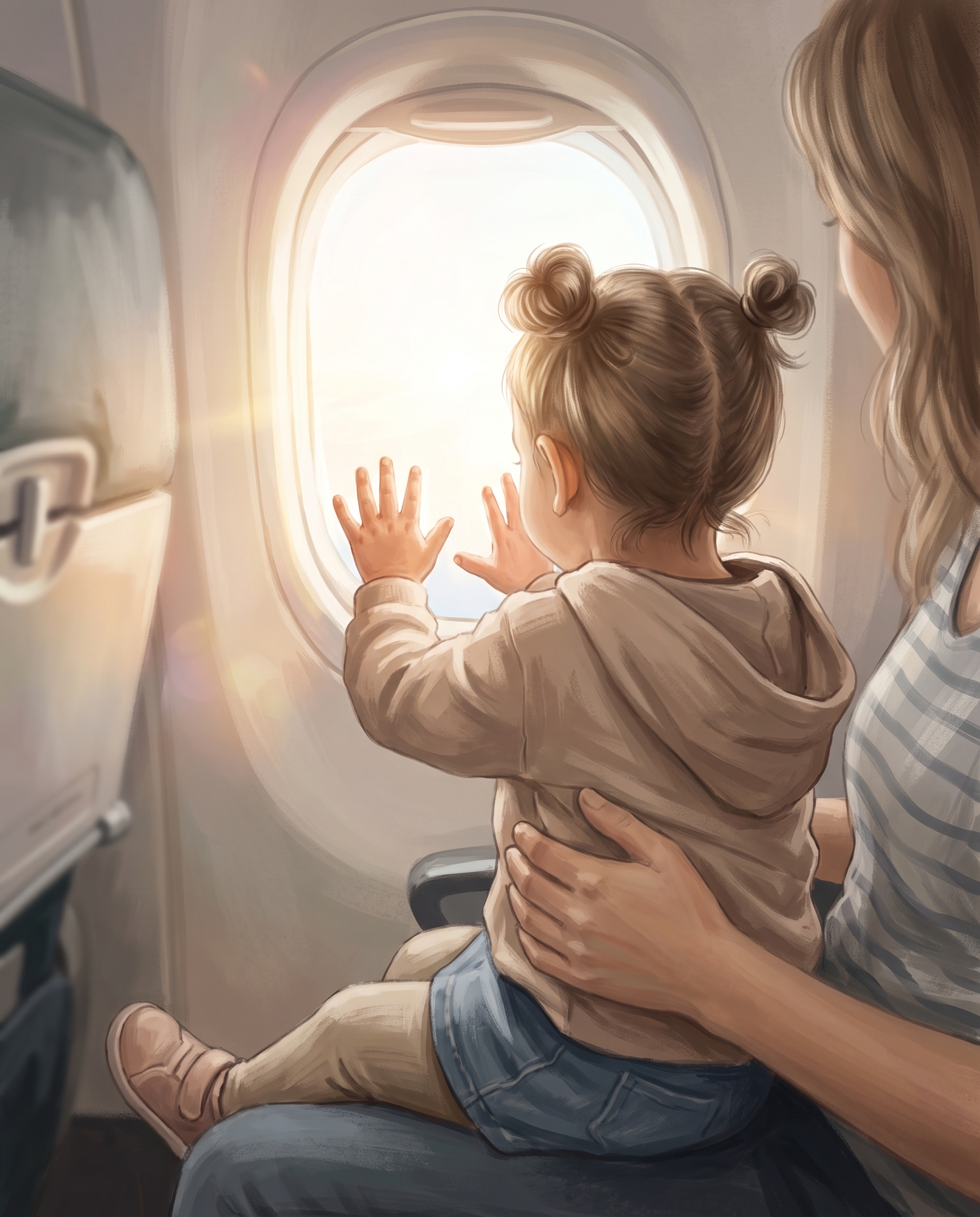
Toddlers are enough work on solid ground. 😅
Add a plane, recycled air and a seatbelt sign, and flying with a toddler on your lap turns into a real test of patience, for you and everyone around you.
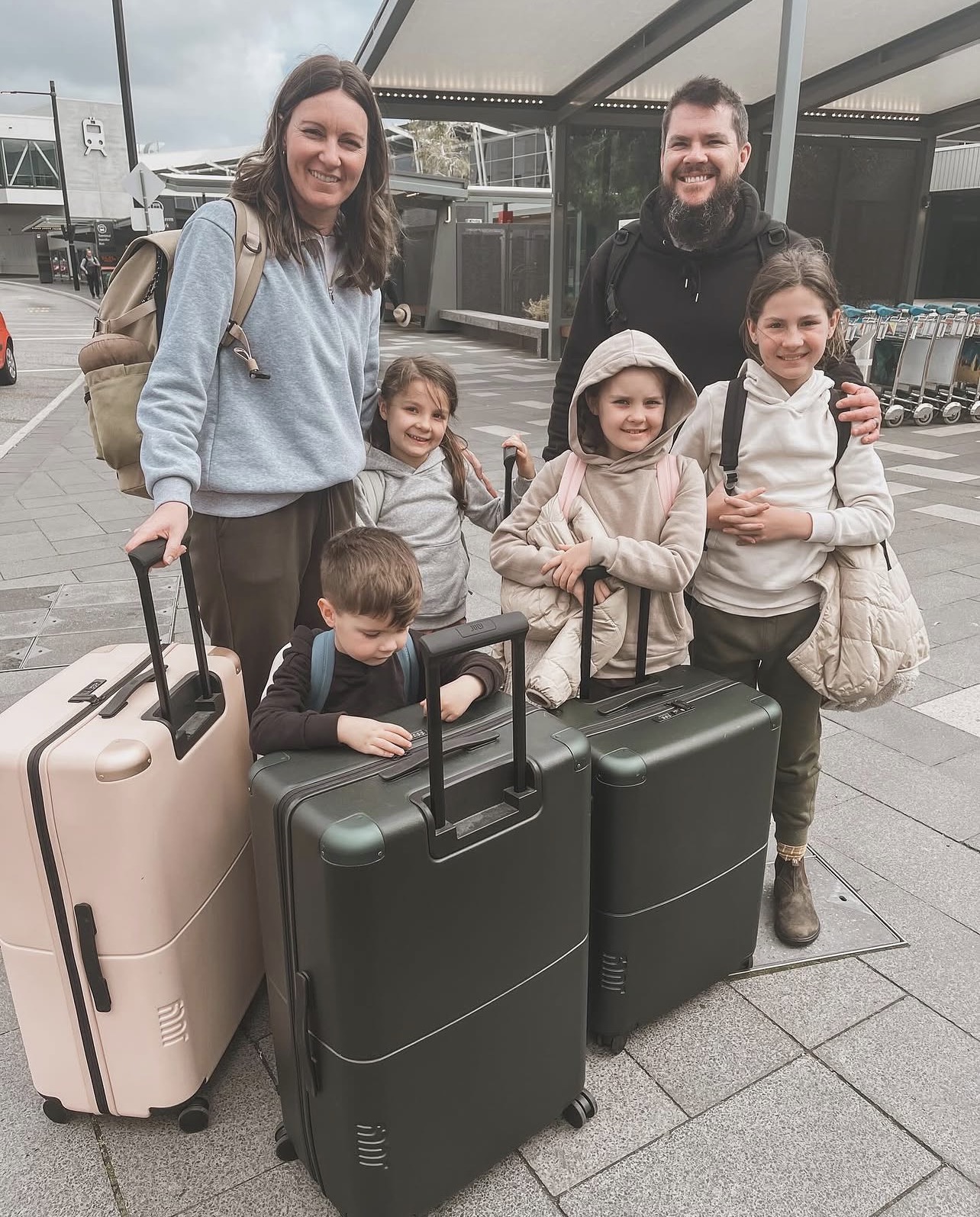
I’ve done it many times. Being a family of 6 and trying to bring down flight costs, lap travel with our toddlers became a more affordable way to fly, screaming descents and all.
If you’re wondering whether flying with your squirming bundle of joy is actually worth the money you’d save on skipping an extra ticket… or just a set-up for the worst travel day of your life, that’s exactly what this post answers. I’ll walk you through what genuinely helps (and what was a waste of backpack space), the rules you need before you book, and how to decide if lap travel is the right call for your family this time.
Prepping for the Flight
Getting through a flight with a toddler on your lap starts long before you get to the gate. A little bit of preparation work here makes the actual flight so much easier, and most of it can be done quickly and easily (yes, please!).
1. Time Your Flight Right
Think about your kid’s rhythm before you think about flight prices. This can go so many ways depending on the child, so I will never tell you which flight time is best to catch.
Does your toddler get cranky around dinner time? Skip the 5pm flight. Do they need a full night’s sleep to actually function the next day? Skip the 5am departure.
If your kid can sleep anywhere, a red-eye might work in your favour. If they fight tiredness on exciting days (as a lot of toddlers do), a red-eye could backfire completely. Mid-morning flights can be a sweet spot, up and going after breakfast, then a nap somewhere over the flight.
You won’t always get to choose, especially on longer routes, but when you do have the option, you can choose whether it’s worth paying a little more for the right time over the cheapest one.
Real chat: Having options with flights isn’t always possible. In many situations, travelling as a family means you are simply looking for the cheapest airfares to trim the budget. I get it. Our family often books airfares using frequent flyer points, so we have to go with whatever times we can get and just make it work. If you get a tricky flight time – don’t worry, you’ll survive! I’ve got plenty more tips below to get you through.
2. Know Your Kid
Before you even book, be honest with yourself about your toddler’s temperament.
Some kids are the “we could snuggle like this for hours” type, all cuddles and stillness, like you two are shooting a Hallmark movie. Others are the “this is a wrestling match and I didn’t agree to it” type. Don’t know which one you’ve got… you’ll know within the first 10 minutes of the plane taking off.
I’ve got one of each. One of my daughters will sit still, work through her activity books with total precision, nibble on her snack, and happily watch three movies in a row without a fuss. Another will spill her lunchbox everywhere the first bite, try to run up and down the aisles of the plane so I can’t catch her, has zero interest in any screen time, and spends the flight kicking the seat in front of her while pulling the window shade up and down. Fun times.
Before you even book, be honest about which one you’ve got. One of them is a flight risk in the literal sense. Both of them are precious. Just useful information before you commit.
“Wait, Can I Fly With More Than One Lap Toddler?”
Great question, and if you’re picturing juggling two toddlers on two laps, the answer’s simpler than you’d think: one lap infant per adult, so if you’ve got two lap-eligible kids, you’ll need either a second adult along or a paid seat for one of them.
I haven’t personally done two lap toddlers at once, but I have done an infant and a toddler together, and an infant, a toddler, and a 4-year-old, all at the same time. Between Matt and I, we just swap kids around to keep things fresh, and yes, there’s a lot of head counting at the airport. On the plane it just comes down to teamwork, whoever’s less frazzled takes the harder kid for a bit. Flight attendants are often more willing to help than you’d expect too. It’s doable, you’ll be surprised what you can manage between two adults and a can-do attitude.
3. Prepare Early
Don’t leave your packing and buying to the last minute. Just don’t.
A simple checklist goes a long way here, and it’s worth prepping your toddler’s favourite food ahead of time too, rather than hoping the airport has something they’ll actually eat.
Want to skip the mental checklist and just follow one? Grab my free printable, Flying With a Toddler on Your Lap: The Checklist.
4. Pack Extra Clothes for Both of You
Pack extra clothes, for them and for you. Spills happen, on both of you. Though I’ll be honest, more than once mine had nothing to do with my toddler and everything to do with me and a juice I should have put down first!
5. Pack Your Carry-On Strategically
From walking age up, every one of our kids gets their own backpack. Even the smaller ones.
Although we end up carrying it through the airport ourselves if they’re young, at least they’ve got their own toys, snacks, water bottle, and spare clothes in one place. It keeps everyone’s stuff separated, so you’re not digging through one giant bag trying to find whose water bottle, or whose spare outfit, is whose.
I carry a backpack myself with all of my stuff, plus extra snacks, anti-bacterial wipes, that kind of thing, and I ration food out rather than giving them full access to their entire snack stash upfront. Give a toddler unrestricted access to their snacks and they will demolish the lot in the first 20 minutes, then you’ve got nothing left for the remaining 10 hours of the flight. Unfortunately I’m talking from experience here.
Nappies and wipes can go in their backpack or yours, whatever works, but we’ve found it easier to keep them in the kid’s own bag along with everything else they need. That way, whichever one of us ends up with the lap infant, their bag just goes with them, no working out who’s carrying what mid-swap.

6. Dress Yourself for Comfort and Accessibility
Wear layers, you’ll get warm fast with a toddler stuck to you, and it’s much easier to peel off a jacket than a jumper mid-flight. Easy shoes you can slip on and off get you through security faster too. Tight jeans digging into your waist while a toddler squirms on your lap is not a fight you want.
This isn’t the day for looking cute. Let’s be honest, this experience is more survival than photoshoot.
7. Arrive at the Airport Early
Getting there early means no line at check-in, less rushing with kids in tow, a better shot at scoring a spare seat, and a calmer run through security. It’s a small part of your planning that makes everything after it easier.
8. Bring Identification for Your Child
Technically, you’re supposed to provide proof of age for your lap infant, either a birth certificate or a passport. Most airline staff won’t ask unless your toddler looks older than 2. But if they do ask and aren’t convinced, they can require you to pay for a fare on the spot, so it’s worth having on hand just in case.
9. Try Your Luck at Securing a Spare Seat (ask for the Bulkhead)
You might still score a spare seat, they show up more often than you’d think. To improve your odds, ask at check-in, and mention it again at the gate before boarding.
If you’re brave enough, book yourselves into the aisle and window seats so the middle seat is left, ideally toward the back of the plane. It’s a bit of a gamble, but it pays off more often than not since middle seats at the back are usually the last to fill.
Or, ask specifically for the bulkhead row, not just any spare seat. It’s genuinely the best place to sit on a plane with a toddler, since it gives you more floor room for a squirmy kid, and on some flights it comes with extra perks. Get to the airport early if this is the plan, first in line gives staff the best chance to accommodate you.
And if it does work out, that’s a bonus seat, not a guarantee, they’ll still need to be on your lap for takeoff and landing either way.
At the Airport
Once you’re through security, the real work starts, and it’s not about finding somewhere to sit and wait.
10. Prepare to Be Busy… All the Time
Go into this expecting to be “on” the whole time, not sipping a coffee while your toddler naps in the pram. If you’re hoping for a quiet 45 minutes at the gate, you’ll probably be disappointed, and that disappointment tends to add its own layer of stress on top of everything else.
More and more airports have proper play areas now, and they’re one of the best tools you have. Find it, take them there, and let them run ragged before boarding instead of sitting still waiting for it to open.
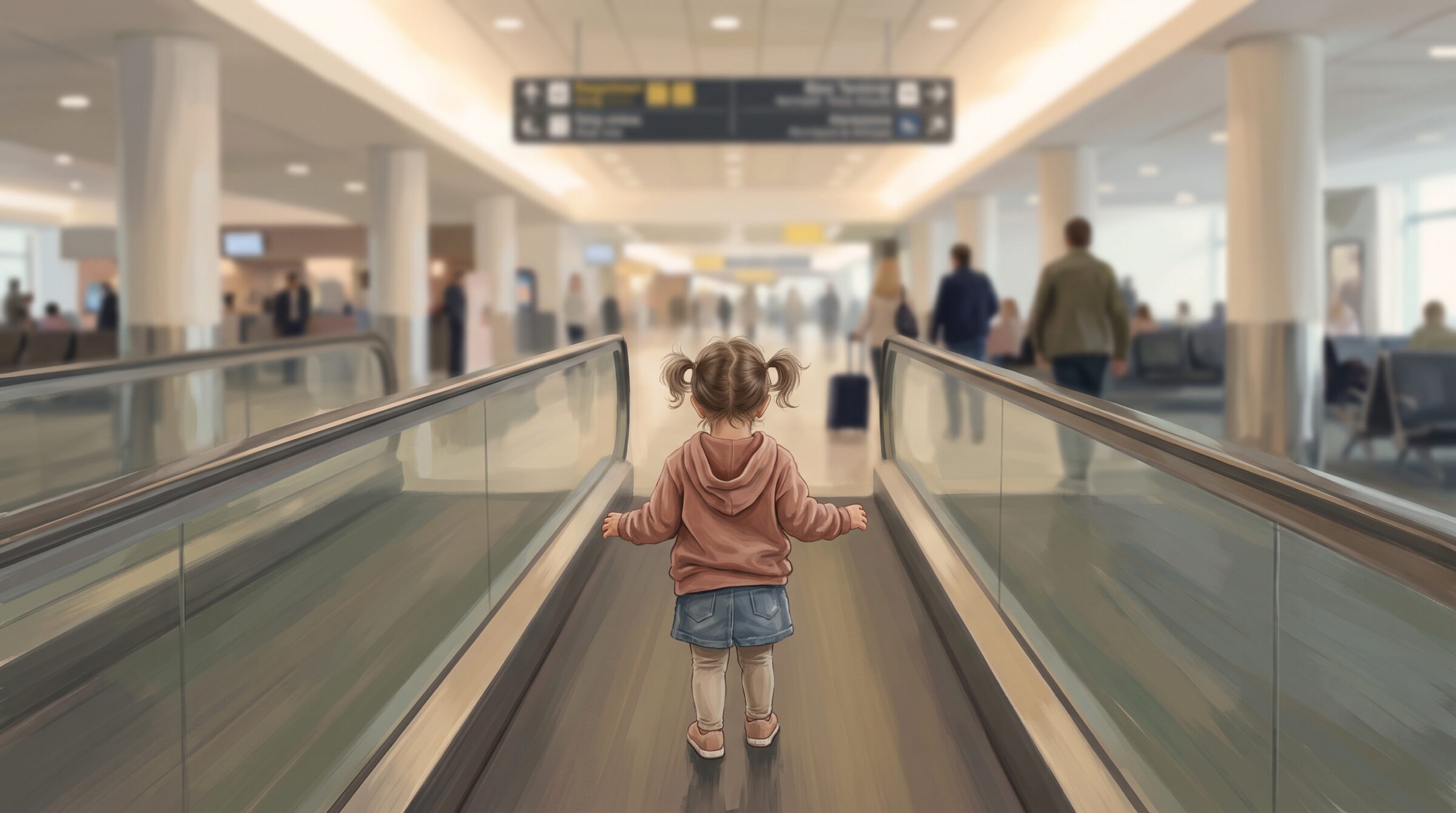
Get those little legs moving. Walk, find somewhere to play, and just follow them. It’s a far better use of that terminal time than waiting.
11. Change Their Nappy at the Boarding Gate Bathroom
Change them before you board, not once you’re squeezed into the plane toilet. The gate bathroom’s changing facilities are always bigger and easier to actually use than the one you’ll find on board.
12. Don’t Take the Early Boarding Option
I know this might be controversial, since early boarding always has that rush of people racing to be first in line, but honestly, don’t.
Early boarding just means more time confined to your seat before you actually need to be there. Let everyone else board first and stay in the terminal, where your toddler still has room to move, for as long as you reasonably can.
The one exception, and the only time we’ve ever done it: a late 10:30pm flight out of a packed Singapore airport, no seats left anywhere to wait, and I was standing there holding my youngest son asleep on me, getting heavier by the minute along with everything else I was carrying. The boarding staff saw us at the back and waved us through. I was genuinely grateful for it. But that’s the only time it’s ever made sense for us.
Surviving the Flight in the Air
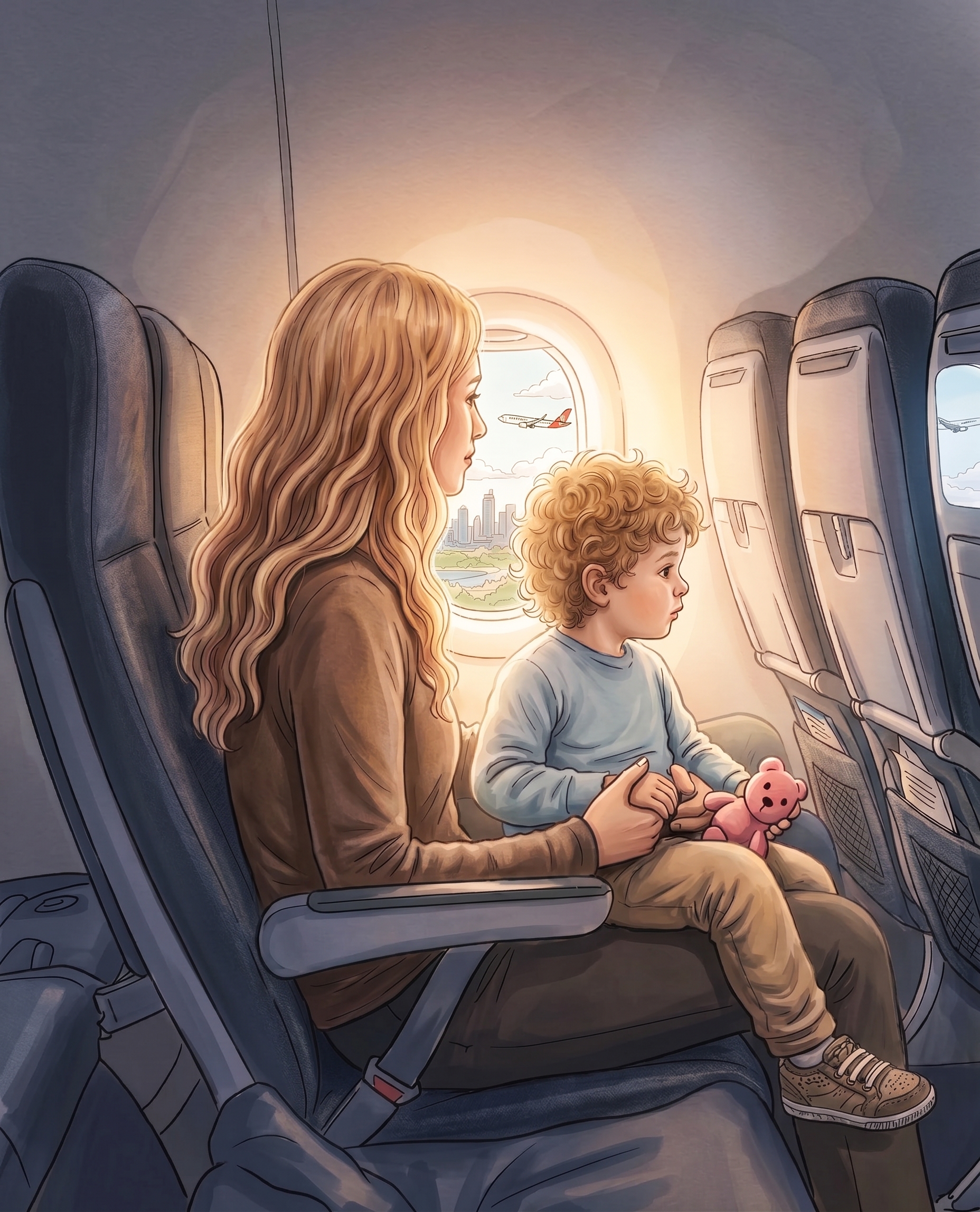
This is the bulk of it, the part everyone’s actually here for. Takeoff to landing, here’s what genuinely helps.
13. Feed During Take-Off and Landing
Toddlers can’t equalise their own ear pressure the way adults can, and that’s usually what’s behind the screaming during descent, not boredom, not tiredness, just pain they don’t know how to fix.
The sucking motion from feeding, a bottle, breastfeeding, even a sippy cup, helps relieve that pressure. Have something ready to go before you start descending, not after the crying’s already started.
14. Prepare for Each Stage of the Flight
Here’s what actually happened to me on a flight once: my daughter screamed through the entire descent. Not upset, not grizzling, properly screaming. The flight attendants were already buckled in for landing and telling me she needed to be buckled too. There was nothing I could do. She would not stay in that seatbelt no matter what I tried, and I sat there caught between what the crew needed and what my daughter’s body was doing, with no good option in front of me.
So if you’re asking what’s the plan when she just won’t stop crying, like actually won’t stop, here it is: there isn’t always one. Sometimes you do everything right and it still falls apart. What you can do is prepare for each stage separately rather than hoping one strategy gets you through the whole flight.
For takeoff, don’t buckle them in until the last possible minute. Have a couple of sucky snacks, a drink, and one new surprise ready to go. Save something special, a new toy, a favourite show, whatever works for your kid, for landing specifically, when they’re stuck in a seatbelt and really don’t want to be.
15. Bring the Right Entertainment Options
Is the iPad going to save me, or is that naive?
Honestly, it depends on the kid and where they’re at developmentally. Sometimes it works brilliantly. Sometimes a one-year-old just won’t sit still to watch anything, iPad or not. If you do use it, make it interactive, not passive. A game they’re actually doing something in beats a show they’re meant to sit and watch.
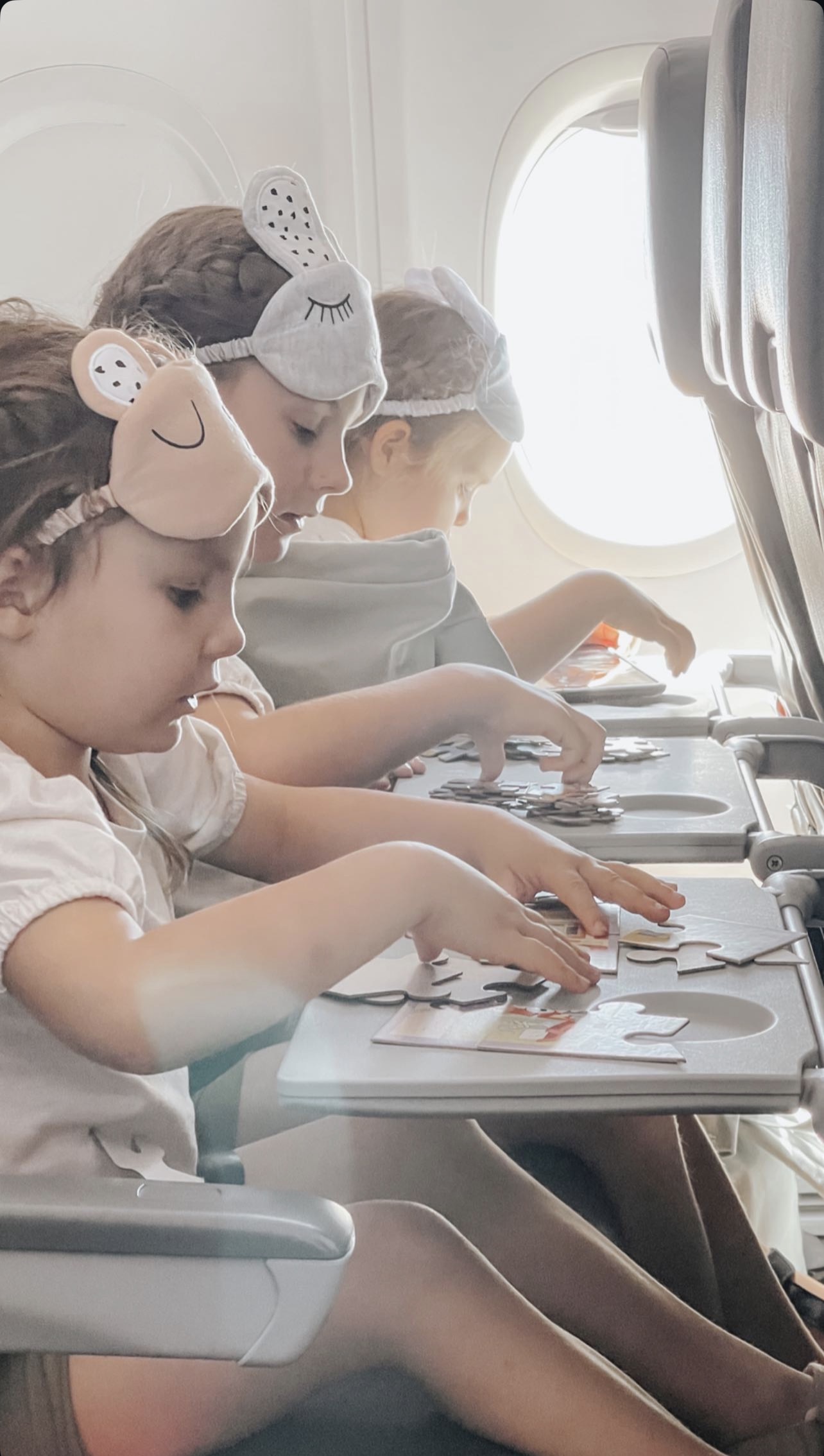
Here’s what I’ve learned after a lot of trial and error: my kids need busy work, not imaginative play. Figurines, little cars, character toys like Spider-Man or a Disney princess, the kind of thing that needs them to invent a game, have never worked for us. What does work is anything that keeps their hands and mind occupied without needing imagination on top of it, post-it tabs they can pull off and stick to the back of the seat, fidgets, activity pads, sticker books, a colouring pad with the marker attached so nothing rolls away.
Nothing noisy, save that for home. I beg you.
Bring things they haven’t seen before too, cheap finds from a dollar store work just as well as anything expensive. And don’t pull everything out at once, be strategic, save your best distractions for when you genuinely need them, not the first 10 minutes.
16. You Can Never Have Too Many Snacks
Bring more than you think you’ll need, always. (Quick one: dry snacks are fine through airport security, liquids just need to follow the standard 3-1-1 rule, more on that further down.)
A few things I’ve learned the hard way. Skip squishable snacks like strawberries, they don’t last and they make a mess you’ll be dealing with for the rest of the flight. Balance treats with solid, healthy food too, a sugar high mid-air is the last thing you want.
And make the snack itself part of the entertainment, cut things into weird shapes, use a little tackle box with divided sections so opening it becomes its own activity, not just eating.
Keep something chewy on hand for takeoff and landing too, it helps with ear pressure the same way feeding does. And don’t rely on asking flight attendants for milk, buy some inside the airport beforehand if you think you’ll need it on board.
17. Don’t Take Your Entire Nappy Bag Into the Airplane Toilets
Pack a small case inside your bag with a nappy, a small pack of wipes and some cream. Trying to manoeuvre your entire nappy bag into that tiny bathroom is a fight you don’t need to have.
18. Wipe Down Every Surface When You Board
Something I’ve started doing in more recent years: as soon as we sit down, I wipe down everything within reach with an antibacterial wipe. The seatback screen, the tray table (top and underneath), the armrests, the buttons, the seatbelt. Toddlers’ hands go everywhere and then straight in their mouths, so starting with a clean surface is worth the two minutes it takes.
19. Stretch Their Legs (But Time It Right)
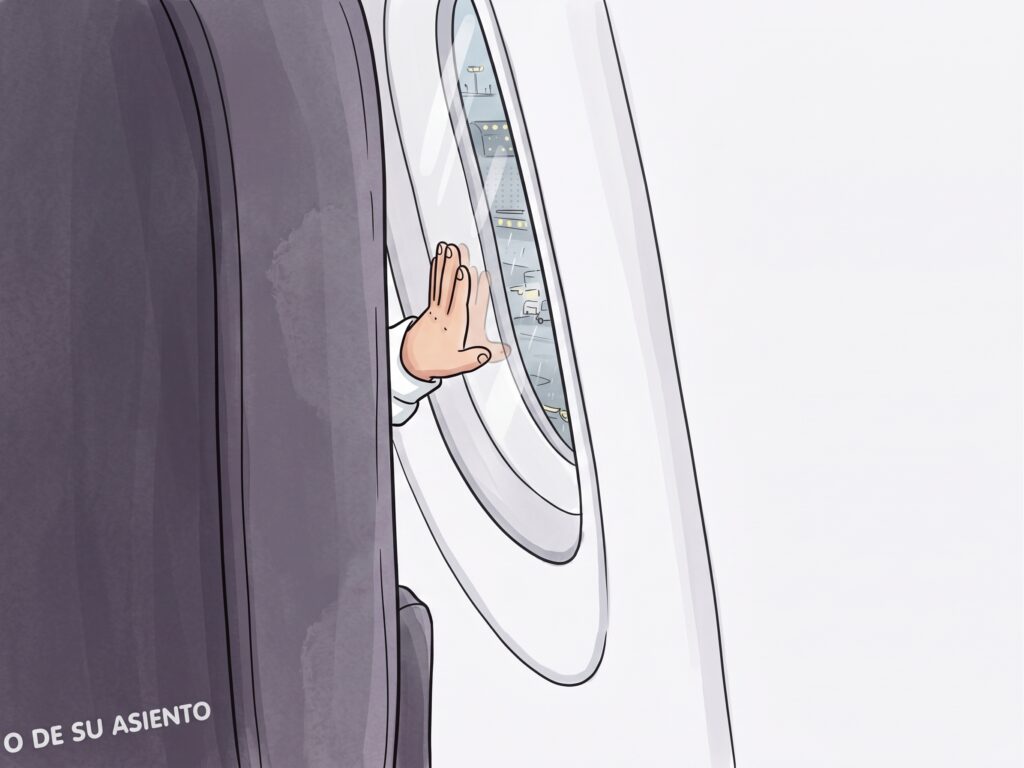
Get up and move when you can, but time it carefully. Straight after a drink service tends to work well, so you’re not getting in anyone’s way. Don’t overdo it either, once or twice is usually enough.
20. Swap When You Need to Reset
If you’re travelling with a partner, swap.
Matt and I take turns, and it’s honestly one of the best things we do. Although on a flight we had to New Zealand once, I had the youngest child first who was wired and active the entire time. On the next connecting flight it was Matt’s turn and both children fell asleep and slept peacefully the whole way. Typical!
You get the good and the bad either way, but swapping means neither of you is carrying all of it alone. Talk about who’s taking which stretch before you board, not mid-flight when you’re both exhausted.
21. Utilise the Baby Carrier
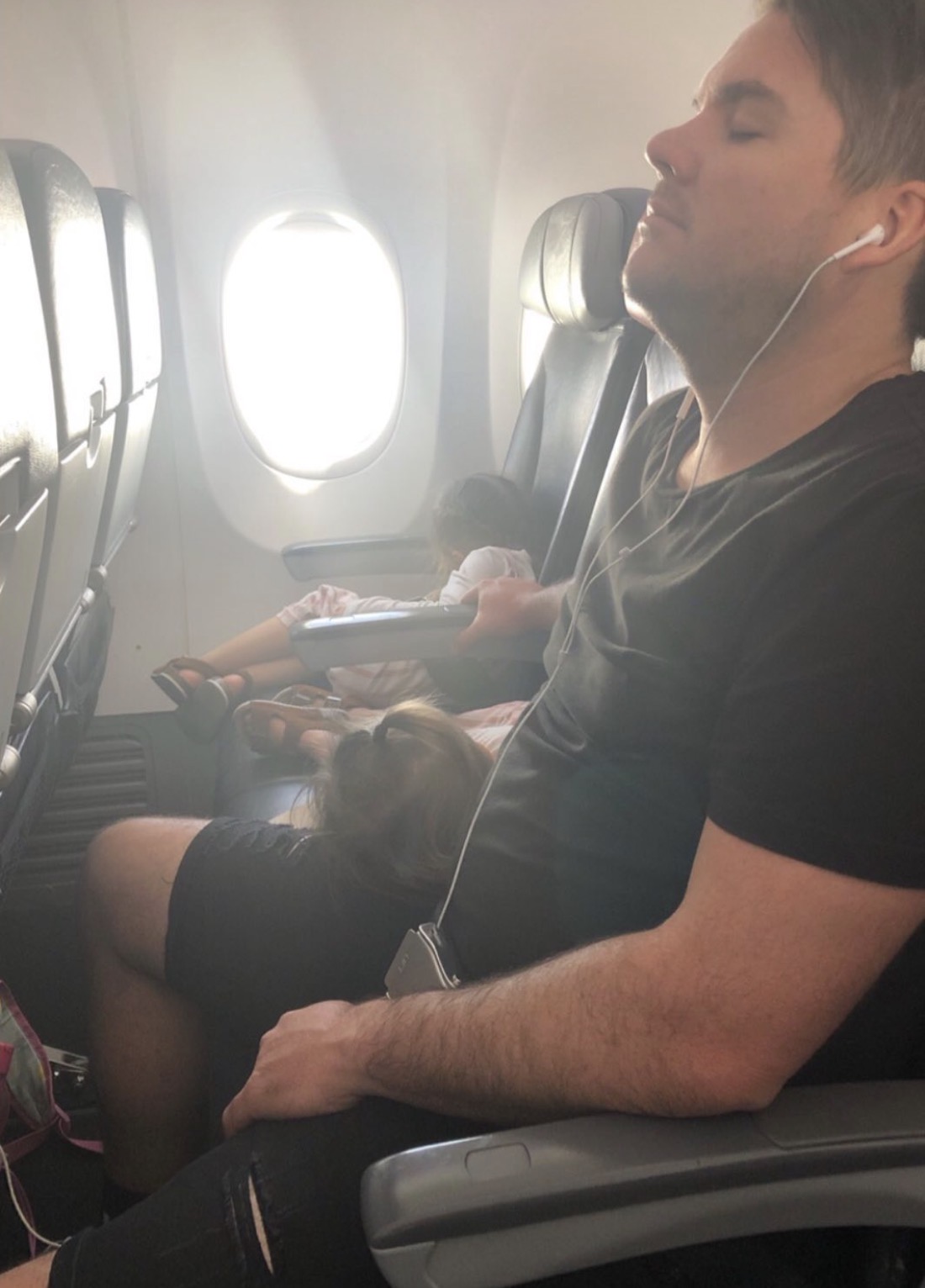
If they’re not too big, a carrier is genuinely helpful when your toddler needs the comfort of being held without you ending up with dead arms. They tend to settle and fall asleep more easily in one too. It’s also useful for getting around the airport itself, baggage claim especially, when you’ve got your hands full with everything else.
22. Don’t Forget Their Comforts from Home
Bring whatever normally settles your toddler, a dummy/pacifier (and a spare, because it will get dropped or lost), a soft toy, a blanket, whatever their particular snuggly is. This isn’t the flight to test something new.
23. Get on the Electronics Train
If you think they will use it, put that screen in front of them, no guilt required. It’s one of the best tools you have for settling a tired, squirmy toddler, but don’t overdo it, and don’t bring it out too early or it loses its appeal fast. Save it for when you actually need it.
Bring headphones with a jack input, and if you’ve got more than one kid sharing a device, a multi-jack splitter means they can watch together instead of needing a device each.
24. Whip Out Your Family Videos on Your Phone
This one sounds small but it works surprisingly well. Show them videos of themselves or their siblings. It reliably gets them to sit still when almost nothing else will, and it’s a great one to have saved specifically for landing.
Sleep & Long-Haul Flights
Sleep is the thing every parent hopes for and can’t fully control. Here’s how to stack the odds in your favour, especially once the flight gets long.
25. Make Sleeping Easier for Both of You
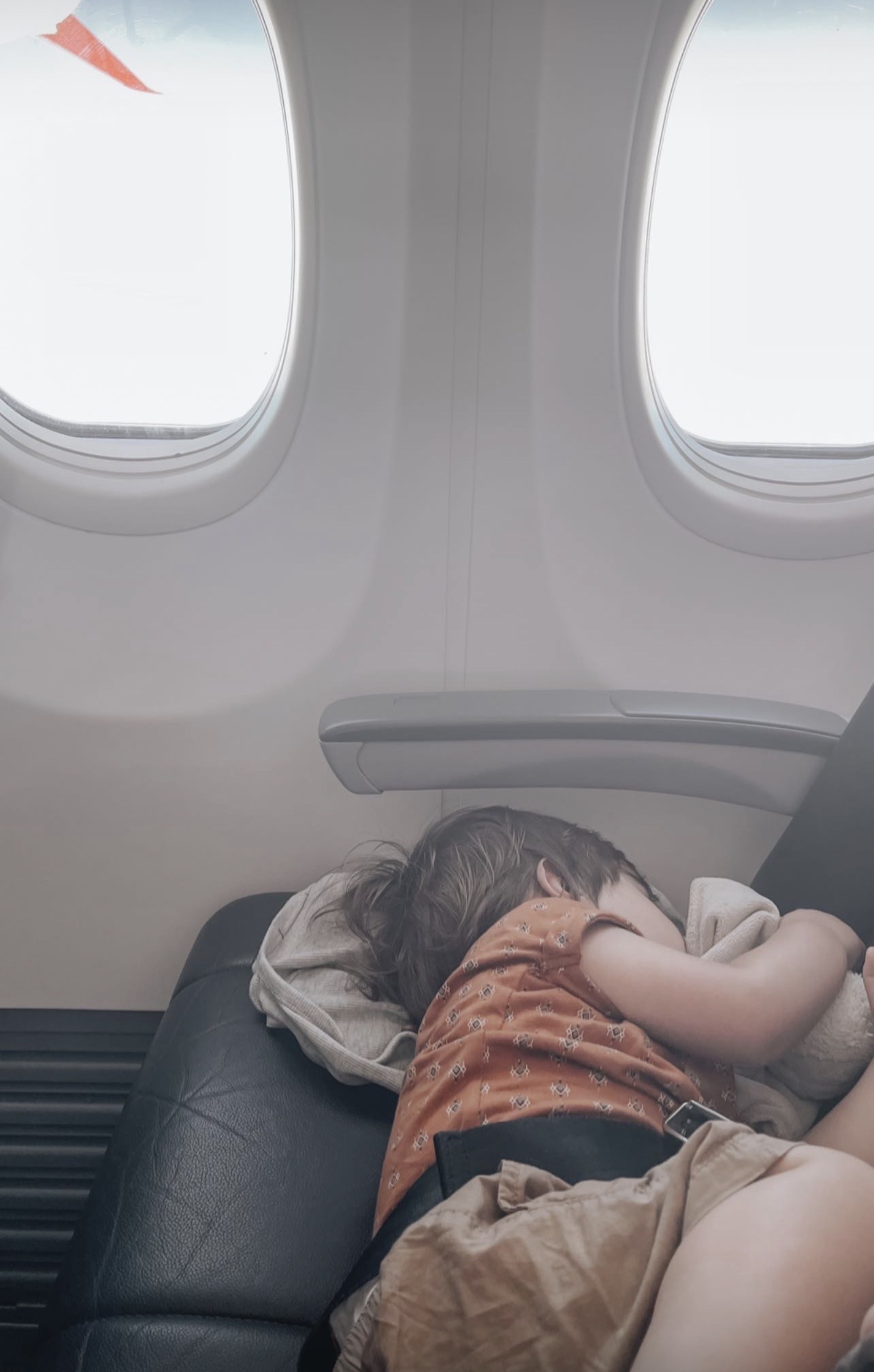
Stick to their normal bedtime routine as much as you can. Sing the same songs, read the same story, bring their snuggly or blanket, whatever they’d have before bed at home. Even if they don’t fall asleep right away, that familiarity signals it’s time to settle, even at 30,000 feet.
We’ve only done a full pyjama change once ourselves, mostly because it means carrying pyjamas and finding the space for them, but even just having them brush their teeth before boarding can help.
Dim the lights and switch off screens once you’re winding down too, rather than expecting them to fall asleep with a show still playing.
26. Be Flexible with Routines if Needed
If they don’t sleep, that’s okay. Stressing about it usually adds more panic for both of you than the lack of sleep itself does.
If they want to eat the whole flight instead, let them. Don’t force sleep just to stick to a schedule that made sense at home, let them play, let them explore, and they’ll usually start to fade out on their own timeline. Fighting it just adds stress on top of stress.
27. Preparing for a Long-Haul Flight
Long-haul is a different game, so set your expectations accordingly. You’re going to be “on” the entire time. A movie and a glass of wine are not necessarily on the cards this flight, and if either one happens, treat it as a bonus, not the plan.
Don’t stay up all night getting ready either, thinking it’ll help you sleep on the plane. It usually just leaves you exhausted before you’ve even boarded, and that exhaustion tends to hit your mindset and your ability to cope harder than the flight itself does.
Hunger and tiredness are the two biggest triggers for a toddler meltdown at altitude. Come as prepared as you can on both fronts, snacks on hand, comfort items within reach, and you’ll head off a lot of trouble before it starts.
28. Use Stopovers to Move, Move, Move
If your long-haul has a stopover, use it properly. Let them stretch out, run, climb, whatever they need. It’s your best chance to burn off the energy that’s been building up in a confined seat, before you strap back in for the next leg.
Mindset & Real Talk
Before you go, a bit of the emotional side, because the tips only get you so far without this part.
29. Try to Relax
I know, easier said than done with a toddler pinned to your lap at 30,000 feet. But your energy rubs off on them more than you’d think. If you’re tense, they tend to pick up on it and mirror it back. Focus on the basics, fluids, staying calm, taking what comes, and let the rest go.
30. Be Nice to Those Around You from the Get-Go
“Is a squirmy toddler going to make everyone around us hate us?” Not if you set the tone early.
A quick smile, an apology in advance, even just acknowledging the row around you goes a long way. You’ve got every right to be there, lap toddler and all, but people are generally far more understanding when they feel like you’re on their side too, and that goodwill matters more when things do go sideways.
31. Mindset Is Everything
For a long time, I kept expecting the flight to be the beginning of my holiday too. I pictured a quiet meal, a movie, some peace. And every single time it didn’t happen that way, I felt genuinely disappointed, like I was missing out on something I was supposed to get.
It took a while, but I had to learn that calm flights with a toddler on my lap were never going to be a thing, not back then anyway. I’ve got slightly older kids now, and I do get those easier flights these days, the quiet ones, the ones where nobody needs my lap. But that’s my season now. It wasn’t then. Once I accepted that, flying got so much easier, not because anything about the flight changed, just my expectations did.
We’re a family of 6, and we’ve had our fair share of tricky flights with toddlers on our laps. But we don’t regret a minute of it, and it’s never stopped us from travelling. So if you’re wondering whether it’s worth it: yes. Not because the flight itself will be easy, but because what’s waiting on the other end usually is.
What You Need to Know (Rules, Safety & Costs)
You’re sold on the idea, now let’s cover the fine print before you actually book.
Lap Child Age & Rules
Generally, under 2, your toddler qualifies as a lap infant and can fly on your lap. Once they turn 2, they’re considered a child and need their own paid seat. Rules do vary by airline though, so always check with whoever you’re flying with before you book.
“What if she turns 2 partway through the trip, does that mess up our return flight?” In most cases, yes, if your child turns 2 while you’re away, you’ll typically need to book a paid return ticket for them, even if they flew out as a lap infant. A few airlines make exceptions here, so it’s always worth checking directly with your specific airline rather than assuming.
One lap infant is generally allowed per adult, though this can vary, so check your own airline’s specific rules on this too. If you’re travelling with more than one toddler under 2 and only one adult, you’ll typically need either a second adult along or a paid seat for one of them.
Let’s use Qantas as an example (current as of 2026): an infant is defined as under 2 years old, up to 23 months. On domestic Australian flights, lap infants travel completely free, no fare or taxes, though they still need to be added to your booking. For international flights, infants under 2 who don’t occupy a seat are charged 10% of the adult fare when accompanied by an adult, and there must be one adult for every infant booked, or a fare must be paid.
As always, this is a snapshot, not a guarantee, check Qantas’s current policy directly before you book, since these things do shift.
Is Flying With a Lap Toddler Safe?
Short answer: not the safest option. Every major aviation safety body, the FAA [1], the NTSB [2], and the American Academy of Pediatrics [3], recommends against it, and the FAA’s own guidance is blunt: the safest place for a child on a plane is in an approved child restraint system, not on your lap, because turbulence is the leading cause of pediatric injuries on a plane [1].
It’s still allowed because of a genuine trade-off at the policy level, if families were forced to buy an extra seat for every child under 2, many would drive instead, and driving is statistically far more dangerous than flying [4]. Even accounting for the added risk, flying with a lap toddler is still statistically safer than driving by a wide margin, the risk is real, but it’s remote [5].
Where parents land on this varies, and it usually comes down to weighing that known, small risk against cost and practicality [4], which is exactly why I’m not going to tell you what to do here. Know the actual guidance before you decide, not just that lap travel is allowed, but that it’s allowed despite the FAA, NTSB, and AAP all recommending against it [1][2][3]. Go in informed, and whatever you choose, it’s not a decision that makes you a bad parent either way.
Lap Infant Fares
A lap infant isn’t usually free. You’ll typically still pay the taxes and fees that come with a ticket, and sometimes an extra fee on top, often around 10% of the adult fare.
“Do I have to pay anything at all, or is it truly free domestically?” In many countries, yes, US, Canada, and Australia among them, domestic lap infant travel is often free. But it’s not universal, some countries still charge taxes even domestically, and age cutoffs for what counts as a “lap infant” can differ too. Always check your specific airline and country’s rules rather than assuming.
We’ve flown internationally with young kids ourselves, enough to know the lap fee situation can look a little different once you’re outside domestic rules. If you’re flying internationally for something like a family wedding, budget for the fee to potentially be a bit higher than a domestic flight, and check directly with your airline rather than assuming the domestic rules carry across.
Lap Infant Luggage Allowances
Lap infants usually don’t come with their own checked baggage allowance. That said, most airlines will still let you check a stroller, car seat, or portable cot the same way they would for a paid ticket, and you can generally bring a small diaper bag on top of your normal carry-on limit. Policies vary by airline, so it’s worth a quick check before you fly.
How to Decide: Lap or Paid Seat
“Is it actually worth saving the money, or am I going to regret not just buying the seat?” Here’s how I think about it: weigh your child’s temperament, the length of the flight, and what you can actually afford, in that order. A calm toddler on a 2-hour flight is a very different call to an active one on a long-haul leg.
And if you genuinely can’t decide? Here’s a simple fallback: if the flight’s under 3 hours and your toddler is generally easygoing, lap travel is usually fine. If it’s longer than that, or your toddler is more the “climbing the seat in front of them” type, the paid seat could be worth it. When in doubt, the extra seat buys you peace of mind, and that’s rarely money wasted.
FAQs
How Can I Protect My Baby’s Ears While on a Plane?
To protect your baby’s ears while on a plane, feed them during takeoff and landing, the sucking motion helps equalise the pressure change that causes ear pain. A chewy snack works well for older toddlers who can manage solid food. Staying awake through descent, rather than sleeping through it, can also help since swallowing happens more often.
What Is the Best Time of Day to Fly With a Toddler?
The best time of day to fly with a toddler depends on their sleep and mood patterns rather than a universal rule. Mid-morning flights tend to work well, since toddlers are fresh after breakfast and often nap mid-flight. Avoid dinner-time departures if your child gets cranky in the evening, and skip red-eyes unless your toddler genuinely sleeps anywhere.
What Should a 2-Year-Old Bring to the Airport?
A 2-year-old should bring a small backpack with snacks, a comfort item like a blanket or soft toy, a change of clothes, and some quiet activities such as sticker books or fidgets. Keep noisy toys at home. A reusable water bottle and any travel documents required for their age are worth packing too.
Can I Bring Water for a Toddler on a Plane?
Yes, but it’s treated differently to milk and formula. Plain water in a bottle is still subject to the standard 100ml liquid limit at most security checkpoints. The easiest workaround is bringing an empty bottle through security and filling it up afterwards, most airports have water stations for exactly this.
Can I Bring Milk on a Plane for My Toddler?
Yes, milk (along with formula and other toddler drinks) is treated as a medically necessary liquid and is exempt from the standard liquid limit at security, at least under US TSA rules. Just declare it separately at the checkpoint, since it’ll likely be screened on its own. Rules can vary by country’s security authority though, so it’s worth checking your specific departure airport’s guidance if you’re flying internationally.
Wrapping It Up: Tips for Flying With a Toddler on Your Lap
Flying with a toddler on your lap is never going to be effortless, but it doesn’t have to be the disaster you’re bracing for either.
With the right timing, a bit of prep, and snacks you probably already own, you’re in a much better position than you think. And when it does fall apart for a bit, and it might, that’s not a sign you’re doing it wrong. It’s just what this stage of travel looks like sometimes.
If you’re still working out what to actually pack for this trip, I’ve got you covered there too, head over to my guide on packing for travel with kids for the full rundown. And if you’d rather have all of this in your hand at the airport instead of trying to remember it, grab the free printable checklist, pack it, print it, and you’re set.

Rachel Doust is the founder of House of Doust, where she shares practical tips on family travel and smart budgeting for parents who want meaningful adventures without financial stress. A mum of four and a lifelong traveller, Rachel has a heart for helping parents feel more confident about travel and money through honest advice, real-life experience, and easy-to-use resources. When she’s not on the road, she’s busy creating tools that make trip planning simpler for busy families.
love this post? share it!